Growth Centered Story-Structure

The Most Dangerous Game got me interested in story structure. It has long been a popular short story in American high schools. Most USian folks I’ve spoken with are familiar with it and I’ve seen some good rewrites and alternate takes over the years.

The thing is, in US English class they teach that there is only one story structure – the 5 act (sometimes the 3/5 act) with the Hero’s Journey as an incredibly detailed take on one type of 5 act story. And then they present you with The Most Dangerous Game, which fits the 5 act structure by courtesy only.

My English teacher used it as an example of the flexibility of the 5 act. “The resolution is only a single sentence! Everything else is implied.”

You know what else is implied?

The climax. It does not exist in that story. Not in the usual sense. Like, you can cram it into the definition. But say “We are going to have a to-the-death fight, winner takes all,” jump straight to “Victory was sweet” and tell me there was a story climax there? Bullshit.

The climax is in the blank spaces between the words. It’s a beautiful piece of writing. But it’s not 5 act.

(And don’t get me started on Shakespeare and 5 act. How any English teacher can claim with a straight face that the Bard wrote in ‘classic’ 5 act baffles me.)

The point is if you still think ‘5 act structure’ and ‘conflict-based narratives’ are universal and important, I have a reading assignment for you: Worldwide Story Structures by Kim Yoonmi

For me, even though a bunch of stuff made me question the 5 act structure, it was years before I ditched it for my stories. I kept having stories that didn’t work and trying to ‘fix’ them by adding more conflict/better climax/what have you.

Yeah, that was going nowhere, no way, no how.

So I stopped thinking about it and just wrote what worked. For nearly ten years, I hardly thought about the structure of my stories. I read a shit ton about story structures and tried to read a variety of stories with a variety of story structures. But my stuff? I let it be what it was.

Mostly worked, but caused some problems.

One problem was the serial, Mighty Hero Force Epsilon.

Overall, the serial came out well, but I spent over a year fighting it because Season 2 did NOT want to come together for me. Which is why I wrapped it up and pinned “the End” on the piece.

It was also what made me sit down and think about my story structure, if I have a consistent one, what am I doing with my stories?

It turns out, I do have a story structure I follow fairly consistently. It’s just not one I’ve ever seen described.

My Growth-Based Structure

To start with, my story structure is built around growth – character growth and relationship growth mostly. This is why I kept failing when I tried to fix the conflict in my stories. Conflict is a side issue in my stories. By increasing story conflict I actually distracted from the central plotline, which only made the stories worse.

I don’t have a name for my particular growth-based story structure. But (borrowing Kim Yoonmi’s analysis format) I can break down how it works –

Number of Acts: As many as needed

What is it?:

  1. pushed out of normalcy/comfort
  2. lack of stability causes discomfort and upset
  3. growth leads to temporary stability which cannot be maintained
  4. repeat 2-3 as necessary until
  5. characters grow enough they can establish actual stability in a new ‘normal’

Story Driver(s)?: discomfort/unhealthy personal situation

Notes:

Most stories have a ‘central conflict’ in the sense that an outside force disrupts the ‘old normal’ and continues to interfere in establishing a new normal. However a central conflict is not necessary, and if it exists may be resolved before, during, or after the establishment of a new normal. Or not resolved at all.

Other Growth Based Story Structures

This is not the only way to write a growth-based story. It’s just my way. When I look at my reading over the years I recognize other authors using what could be called growth based story structures, all using different structures. There are also some structures, like the four act ki-sho-ten-ketsu and it’s many variants, which don’t necessarily center growth OR conflict, but can center either or neither as the author wishes.

Below is a short list of other authors who have written growth-centered stories

This list is not meant to be comprehensive or academic. It covers the growth-centered stories I am familiar with, which is probably a small portion of the growth-centered stories out there. My goal here is to get a few ideas for different kinds of growth-centered story structures on paper. If you are writing or know other types of growth-centered structures, please reach out!

Maeve Binchy:

Maeve Binchy wrote what I call braided stories. Her novels have one or two ‘main’ characters, but in and around the main character, many other characters twine their own stories. Binchy truly grasped the ‘we’re all the protagonist of our own story’ idea, and wrote books where every character was a protagonist. The story they were protagonist of may have appeared only briefly, but it was there.

In braided stories there is not a climax, any crisis will be a ‘normal’ life-gone-to-hell moment and these happen throughout the story. Lovers may come together without any great declarations, quietly sliding into and through each others lives until it’s obvious that they belong together without anyone needing to say anything.

Instead, each character has a story thread. Most of them start distinct, others are already twined together – often in unhealthy ways. Over the course of the story, these threads come together and pull apart in different ways. Usually, ways that support and buttress each other. By the end, with the direct and indirect support of the stories around them, most characters have grown into a new normal and a healthier life. Those that don’t stand out as examples of what happens when we reject the growth and support offered by people around us.

Andre Norton

Andre Norton is best known for Witch World, but for me her stories that stand out most have always been the Senses and Dipple series. (serieses? How do you plural that?)

In these books, the main character gets caught up in a conflict that was none of theirs – until the wider world forced it on them. Surviving this wider conflict requires growth, often a great deal of it. These stories often include a traditional 5-act conflict structure. But I would argue this conflict structure essentially acts as a macguffin to drive the growth.

The climatic scene in the Senses books particularly often have an almost staged quality. All the characters know their parts, and there is very little tension. They have all grown in knowledge of themselves and their compatriots. Everyone will act in the right way at the right moment, everyone trusts the others to do their part.

This growth may come in the form of new abilities and powers, learning to trust others, giving up harmful goals like revenge, or moving beyond the role one has been trained in all their life. But this growth and how it happens is the center of the story, with much of the conflict never being fully explained, happening off screen, or taking part on a much wider scale than the character’s story.

Miyazaki Hayao

Miyazaki mostly writes ki-sho-ten-ketsu structured stories. Ki-sho-ten-ketsu can be used for either growth centered or conflict centered stories or center something else entirely. Much of anime is ki-sho-ten-ketsu, but Miyazaki Hayao’s stories stand out as unique among anime. I don’t know what Miyazaki calls his fiction structure, if he calls it anything in particular. But to me, his movies always flowed like water, moving from one place to another, sometimes meandering, sometimes rushing and white with rapids. But his stories often focus on his characters growing and becoming.

I’m thinking especially of Spirited Away because it’s the movie I’ve seen most recently (and I can’t watch video these days, brain stuff). But I remember watching Princess Mononoke and Nausicaa and how different they were from everything I had seen before, how much they focused on characters. There were battles, but they seemed to take place almost in the background, even while they were happening. Secondary to the characters and how they interacted with and affected each other.

And Spirited Away, well, that movie is ALL about growth with almost no on-screen conflict.

Ursula LeGuin

Long before I started writing, LeGuin was calling out the conflict-focused view of fiction as a false and imposed restriction based on an unhealthy view of the world. Her essay The Carrier Bag Theory of fiction is still available online and I highly recommend it.

“I differ with all of this. I would go so far as to say that the natural, proper, fitting shape of the novel might be that of a sack, a bag. A book holds words. Words hold things. They bear meanings. A novel is a medicine bundle, holding things in a particular, powerful relation to one another and to us.”

“…its purpose is neither resolution nor stasis but continuing process.”

It’s stretching things to say that the carrier bag is growth-centered. LeGuin never claimed it as such or talked about growth much that I recall. Certainly not all of her stories were growth centered (Olemas comes to mind, as one that wasn’t). But many of them were. The carrier bag theory certainly has room in it for growth centered stories.

A carrier bag, by definition, has room for many things.
Growth-Centered Story Structures

  1. Growth Centered Story-Structure
  2. What Makes a Growth Centered Story?
  3. My Cyclical Growth-Centered Story Structure

The ‘Good King’ Makes a Good Fantasy

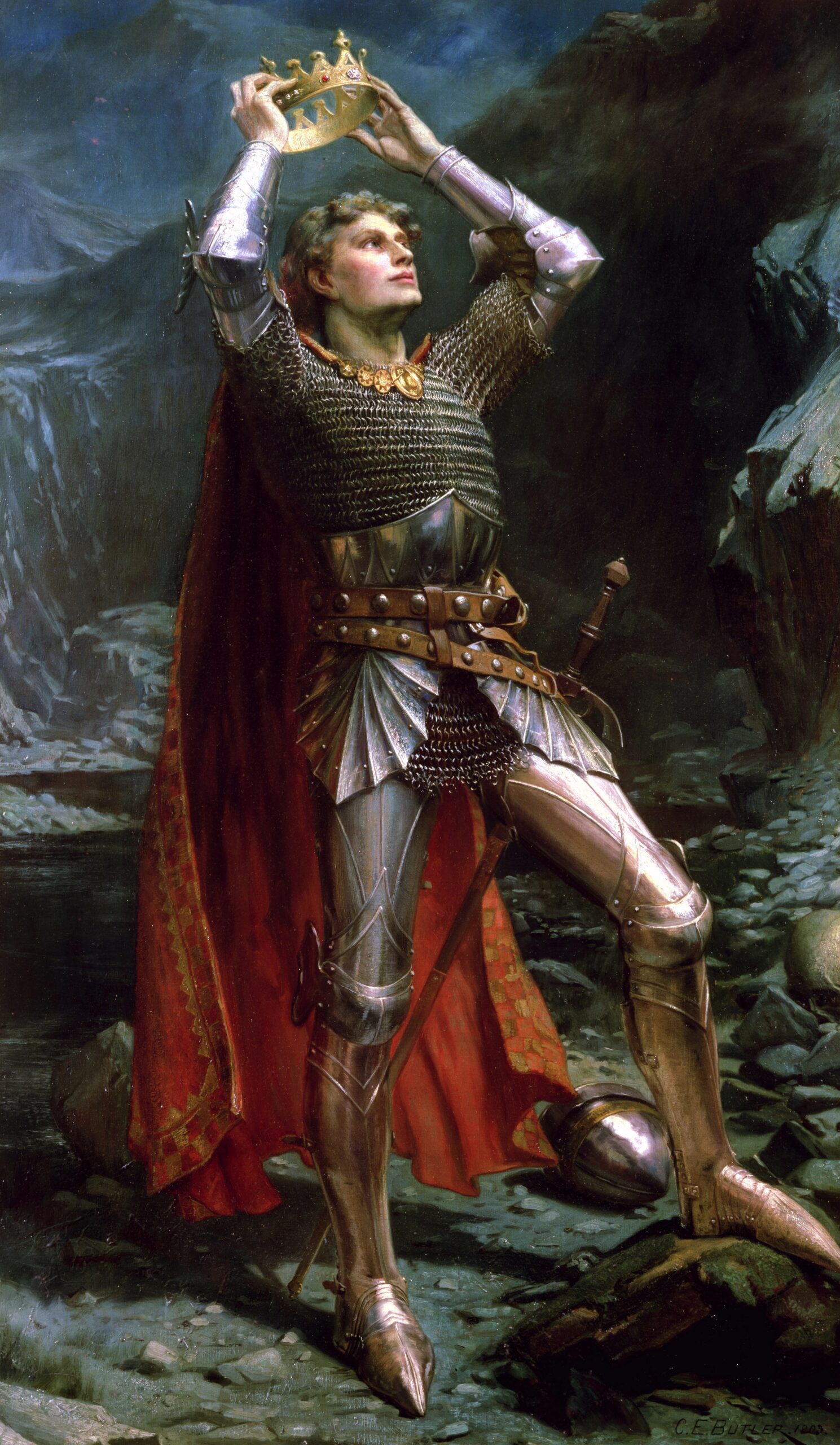
Painting of King Arthur by Charles Ernest Butler

A young white man with wavy blond hair wearing plate armor and a bright red cloak raises a crown above his head.

The idea is endemic to Western civilization. From the Christ-myth to King Arthur and King Richard to Aragorn the Fair… it repeats. In our myths, our fiction, our movies. It’s the same story, though it takes two versions.

In one version — the version that makes for the /best/ stories — there is evil in the land. And there is, somewhere, a good king. The good king is lost, or imprisoned, or off on crusade. Evil sweeps over the land. Some fall into despair, others hold out hope for the Return of the King.

Often, the king /does/ return. He smites the evildoers and raises up the loyal and the righteous, and all the land lives in peace and happiness. He is /such/ a good king that he manages not only to train his heir to be a good ruler but also to prevent succession disputes for at least three generations.

Truly, a /good/ king.

The second version of a good king puts the king in the background. They don’t need to fight for the throne (not publicly, anyway). They simply /are/ the king. They magically manage to hold the throne, keep the feuding nobles happy, ensure the safety of the common people, and make everything so wonderful that unicorns farting rainbows practically dance down the street. They are rarely the center of the tales, but tales happen around them. Good Queen Bess, /le bon roi/ Henri, Jonathon of Tortall, and others both real and fictional.

In both versions of this story, the ruler (it’s usually a king, but it could be a queen, a noble, a president, or a prime minister) attains mythic proportions and the ability to fix everything, for everyone, simply from their own inherent goodness. Or something like that.

What’s Wrong with the “Good King”?

Kept to its proper place — the pages of novels and frames of movies — it’s not necessarily a bad thing. A bit of escapism does us all good sometimes. But we need to remember that it /is/ escapism.

We don’t. We bring it into our lives, our choices, our politics. To different people in the US, Bernie, Biden, and Trump have all been ‘the good King’. Before Trump, it was Obama, hailed as the one who would bring change and fix everything. It’s the new principal hired to right the failing school. The new boss or CEO. A ‘real world government’ to replace the UN or any number of other people or ideas that will magically ‘fix’ everything. Sometimes it’s us.

The Good King presents us with two options. Maybe three. We can cast ourselves as the good king, the savior who will fix everything — from our local theater group to our relationships to the entire damn world. Or we can cast ourselves as one of the grateful subjects content to play out our small adventure or romance or coming-of-age tale. We don’t need to worry about the big picture or the people around us because ‘the good king’ will take care of it. In some versions, we can cast ourselves as the good king’s loyal companions, fighting with him to win the ballot box, the funds for the renovation, etc.

It’s a great story. A very seductive story. One where, no matter what role we play, we don’t need to take responsibility. If we are the good king, whatever we do is good by virtue of our being the king: the one who will make everything right. The Good King doesn’t fail his subjects or screw over his contractors — or if he does, it’s ‘good business sense’ and therefore good. Or we let the king take care of it all and not worry. Or we let the good king tell us what to do and know that as long as we follow orders we are on the side of ‘right’ and it will end in ‘happily ever after.’

The Good King makes a good fantasy. In real life, no one person will bring/maintain peace and prosperity and unicorns in the streets. In real life, we must all take responsibility for building and maintaining a society which is just, which is peaceful, which is free, which is accountable. And all the other things that a good society should offer (and most don’t).

Check yourself. Especially in election years, but also all the time. If you think you meet the Good King, send them off to weed the garden and get back to work.

And maybe find some new fiction to read and myths to enjoy. Getting some variety in your mental diet can be a huge boon to your mental processes.

Four Ways to Get an Emergency Medicine Stash

Back in the early days of COVID, ‘experts’ advised everyone to have two weeks of everything on hand — including medicine. That’s… a bit difficult to do with prescription meds. Many folks were frustrated with the advice and how useless it was to them.

I’m a small-scale prepper who has been working on getting a month’s worth of medicine on hand for a couple years now. The so-called experts were unreasonable to expect people to get two weeks of prescription meds right away. But with time, it is possible — and a good idea. So I decided to help folks out and wrote a quick thread on ways to get the recommended two weeks of medicine.

I decided it was time to turn that thread into something a little more accessible. So here you go. (This info is specific to the US, but some of it will be helpful to folks elsewhere.)

If you want to be able to have extra meds on hand for emergencies, here are some tips:

1. If you have a good doctor, talk to them.

A doctor can up your dosage for a couple months so you can ‘try’ the higher dose, then ‘decide it doesn’t work’. You squirrel away the extra from the higher dosage.

Your doctor can also call in refills early.

How well this works will depend on your insurance and pharmacy, but if your doctor calls in refills 5 days before they run out ‘to be sure you’re covered’ and you can get them right away, that’s five extra days of medicine you can save.

2. Do you have as-needed medication?

Those are the easiest to save. Every time you don’t need it, take it out of the bottle and put it with your emergency supplies.

3. Most of us aren’t good at taking our medication every day.

Some of us miss often, some only once a month or so. But it happens.

Get one of those weekly or monthly medicine things, or make one yourself.

At the end of the week/month, every dose that you forgot to take goes into emergency supplies.

4. Call your insurance.

Yeah, I’m serious. Many insurers have a policy that they will authorize an extra refill once every year to account for lost, stolen, etc. shit. This is also supposed to cover in case of a natural disaster — you can call and say, ‘My house got flooded, and I lost all my medicine!’ and they’ll get a refill authorized early.

So use that policy, call them, and ask if you can get your refills early. (This includes at least some controlled substances bc we were able to get Lozepam refilled this way once.) Our insurance doesn’t ask why; they check which medicines we want and remind us that we won’t be allowed to request extra refills for 365 days. Others may have different policies.
If you can get the extra refill, the medicines from your prior refill can go into emergency supplies.


Okay, that’s what I’ve got.

But there may be other things you can do.

If you can, talk with your doctor, pharmacist, or caseworker. Tell them you need help getting the recommended emergency supplies; they may have more ideas.
You probably won’t be able to get a supply of ALL your medicines, at least not quickly. But you can get started and get some of them.

The real pain is if your medicine schedule is still in flux. Don’t know how often I’ve finally gotten a month’s worth of one medicine, and then the dosage got changed or it got dropped.

But it can be done.

Good luck! And a final important tip from @gendertreyf@masto.jews.international :

Once you have an emergency supply of medications make sure you use them before they expire. I like to use the old bottle and put the new bottle into the emergency stash every month. That way the meds never get old.

Fiction and A Conflict Centered World View

I don’t know as much as I’d like to, but I’ve noticed something. Conflict centered stories became the ‘one twue way’ around the same time that nationalism was at its height and white supremacy was being taught as ‘science’ in most colleges and universities.

This is me combining a bit of knowledge to come up with a lot of ideas. ‘Essay’ I was told in school means ‘I think.’ This is a bit of what I think, backed by what facts I have, on a topic far more complicated and in-depth than I have the personal resources to explore.

Conflict and…

Christianity

Most of the folks involved in the creation of the ‘all stories are conflict’ myth were Christian. (I know of one who wasn’t. I think.) When you stop to think about it, that culture and ideas show through. Christian culture and worldview are also conflict-centered.

The Christian worldview revolves around four conflicts:
God vs Devil
Devil vs. Good Christians
Good Christians vs. Bad Unbelievers
Good Christians vs. Themselves

While some churches have moved away from talk of the Devil and toned down the ‘Bad Unbelievers’ rhetoric, many haven’t. And those churches which have, have often doubled down on the internal conflict — especially in this age of rising atheism and people leaving the Churches. The party line is that lacking a sense of connection to God is not a sign of a problem in your worldview/beliefs/actions, but rather a personal test to be overcome through greater commitment and belief.

Conflict is so central to Christianity that it is part of the most sacred prayer.
“And lead us not into temptation,
but deliver us from evil.”
Every day observant Christians acknowledge that conflict (internal and external) is central to their lives and ask God’s protection from it.

Contrary to what many Christians believe, this is not a common worldview. I don’t know as much as I’d like about other religious traditions, but I do know enough to know that. The only other religions I know that have anything like this are closely related to Christianity and also have a ‘Devil’ figure (also rare in world traditions) — Islam and Zoroastrianism. Other religions may acknowledge that conflict is a part of life and can be part of spiritual growth, but nowhere near so central a thing.

White Supremacy

This is where I get into stuff I don’t know as well as I’d like. My understanding is that Christianity had a huge influence on the development of White Supremacy. White supremacy also has a conflict-centered world which posits white people as under assault (literal and spiritual) from nonwhite people. The so-called ‘White man’s burden’ is a well-known example of this: white men going out to bring the other races to enlightenment — forcibly if necessary.

Of course, conflict-centered stories ideally figure not ‘just’ a protagonist, but a hero. A hero who in concept reflects all the virtues white supremacy ascribes to the White Man going forth to conquer the world.

The generic ‘hero’ of Anglo cultures is a big, buff, white man strong enough to defeat scores of mooks single-handedly. The hero is the hero because he, like the White man, brings peace and prosperity (or at least a happy ending).

Don’t believe me? Take a look at the early comic book heroes — the ones created around the same time that conflict-centered writing was becoming the end-all, be-all of English literature.

Our idea of heroes has evolved since then, but still, the White Savior looms over all, cape flapping in the breeze.

Imperialism

Western Imperialism comes from Rome. Every Empire of Europe for 2000 years has claimed to be Rome’s successor or the ‘new’ Rome. The label has been given to the US as well, and frequently. ‘Fascist’ comes from the Roman ‘fasces’ — a bundle of sticks with an ax sticking out. It’s been a symbol of government power for well over 2000 years. You can see that bundle on government seals across the ‘Western’ world, invoking the authority of ancient Rome.

The very word “Imperialism” comes from Rome — from “imperare”: “to command.” One might say that imperialism is the belief in the right of empire to command.

The history of Western thought is contained in the unholy alliance Constantine forged: Roman Imperialism given the imprimatur of Christian sanctity. “God is with us!” cried the Catholic armies of the Holy Roman Empire during the 30 Years’ War. Their Protestant enemies responded with similar claims of divine favor. Together they watered the fields of Central Europe with blood for decades.

In the Americas, Catholic Spain and Protestant England exported Roman Imperialism and Christian sanctity to a so-called ‘New World.’

Imperialism cannot exist without conflict, because imperialism requires the borders and powers of empire to be ever-expanding. We measure the greatness of an empire by the /furthest extent/ of its borders. An empire’s collapse begins the moment it stops expanding. To pull back, to dig in and hold is to admit weakness, the ultimate sin of empire.

… Stories

Here is where knowledge fails and I’m in realms of speculation. The facts as we know them:

During the early 20th century, Britain was the Empire the sun never set on and the US was celebrating ‘Manifest Destiny’, supported and buttressed by Christian evangelism and white supremacy. And an idea arose in the heart of English literary philosophy. The idea that all stories are conflict-centered, and plots are defined by their central conflict. Out of this idea came the claim that all stories /must have/ a singular protagonist and an antagonist opposing the protagonist. The antagonist acts as a foil for the protagonist’s hero-dom to be displayed against.

(Antagonist, by the way, is unrelated to ‘protagonist.’ It originated in battle or sport, not literature.)

Outside of English literature, stories that did not fit the 3 or 5-act conflict-centered straight jacket continued as before. Say what you with about Dostoevsky, but his stories did not center on conflict. Nor, I am told, did most other Russian novelists. In East Asia, the many variations on 4-act structure (best known in the US by the Japanese version, ki-sho-ten-ketsu) continued. It was first introduced to English-language audiences through anime and manga. (Hayao Miyazaki is a master of the form.) Hakawati continue to be told and celebrated in Western Asia. And thousands more story-forms I could not learn in a very long lifetime. Contrary to the old saw there are not 7 plots, there are millions.

Stories that don’t center conflict have survived in English literature, but only on the margins. On the one hand, you have Jack Kerouac and other beat/post-modern/literary/etc authors who ‘experiment’ with the limits of the genre. They wrote in ways (it is implied) more mundane writers can’t. On the other hand, you have slice-of-life stories. These were long ago relegated to the ‘chick lit’ section of the store, less respected even than romance, which at least has a ‘proper’ genre and place on the shelves.

But in schools and workshops and writers groups around the country, these are ignored. “You need conflict” writers are told. As if a story suddenly stops being a story because there aren’t enough heroes and villains in it.

A chance of timing? The relatively new popularity of English novels and short stories may have led to a new consideration of literary theory right at the time these conflict-centered worldviews believed they had succeeded in subduing the world.

Maybe I’m missing something. (I’m probably missing a lot of some things.)

But I think — I /feel/ — there is a connection here. Even if I don’t have the words to frame the connection — or even the necessary questions.

In the meantime, I hope I got you thinking.

(As always, credit and thanks to Kim Yoon Mi and her giant-ass essay on story structure. Thanks also to Marcia X for long threads and treasured conversations on the history of White supremacy and colonialism.)

A Cousin’s Blood

The ritual was simple, as all new rituals are. It was based on an older tradition – one that long ago ceased to be simple, but retained a simple core.

Teach them to your children.

Rachel and Chana prepared while the children gathered around. The grandparents waited in the background, eyes shining as they remembered the early years when they had prepared so, the fear and the hope and the promise to do what must be done.

“Why is this day different from other days?” asked Nathan. He was twelve that year, about to be b’mitzvah and take on responsibility for his own actions. The next year, if he chose, he could begin training to join his parents when he turned eighteen.

“How is this day different?” Chana responded.

“Most days, we go out together, but today you leave your children home.”

“Today, we go where it may not be safe,” Chana said as she checked the balance of her shield.

“How is this day different?” Rachel asked.

“Other days, you go out for dressed peace; today, you go out dressed for fighting.”

“Other days, we go out for our own reasons; today, we go out to guard our cousins.” As Rachel spoke, she locked her phone in a portable Faraday cage and packed it in her emergency medical bag.

“Why do we guard our cousins today?” asked Yiska, the youngest.

Rachel and Chana paused their preparations in surprise. Yiska did not have part in this ritual, she was too young. But the question was right and the answer was important.

Chana knelt down and chucked Yiska’s chin. “God commands that we are responsible for our siblings. We must never stand by while our siblings’ blood is spilled.

“Our cousins are not siblings, but they are still family. God surely did not mean for us to guard our siblings and ignore our cousins. So we guard them when they need it. And they guard us when we do.”

It was an idea centuries old, born of the Blood Libel and the pogroms, when the Jews of Europe’s ghettos needed to always be ready to defend themselves. Today it was repurposed for a new age. Across the city, but especially in homes clustered around the city’s synagogues, people prepared riot shields and bullhorns, medicine and bandages.

No one remembered who began the tradition or even what city it started in. Perhaps it had begun in many places at once, as needed things sometimes do. But in every city and town where the cousins lived side by side, the practice was honored and cherished.

Rachel and Chana finished preparing and the family ended the ritual with song, because all holy days must have songs. They sang new songs to go with the new ritual. We will build this world with love, the song said, and God will build this world with love.

Then Rachel and Chana thanked their parents for watching the children, and left. As they stepped out the door, they murmured a brucha. “Blessed are You, Lord our God, ruler of the Universe, who has commanded us to protect our family.”

As the call to prayer went out across cell phones and radios, they came. Some in kippah or tichel or snood, others bare-headed, the Hebraic Community Defense teams gathered around the mosques of the city. None came barehanded. Inside, their cousins would pray in peace, undisturbed by whatever the day might bring.

The guardians expected a quiet day. Their cousins would share their feast and they would spend the time exchanging news of family and friends, making plans for the new year, and even playing games. But still, they would watch, and when their cousins finished praying and emerged, the guardians would greet them with a song. All holy days must have songs.

Tomorrow night, as the shofar rang out across the city, the Islamic Community Defense teams, in keffiyeh or hijab or neither, would stand guard over the synagogues.

It had been 20 years and more since the last major attack on a house of worship. The most they guarded against today was petty vandalism and hecklers. But still, for each holy day, they gathered. Still, they taught their children why.

Lest a cousin’s blood be spilled.


I wrote this the summer of ’23, for a market requesting visions of a better future. Ironic considering how much worse the near future actually was. But no matter how bad things get, they can always get better. May a better future come soon for all of us.

Emergency Prep: Introduction to Go-Bags

I consider myself a small-scale prepper. By this, I mean that I am not interested in preparing for ‘the end of the world as we know it’ (TEOTWAWKI) or stocking up on weapons for the ‘inevitable civil war.’

But I absolutely am interested in having enough emergency supplies laid in for ‘predictable emergencies’ (plus a bit).

Predictable emergencies are things that can and often do happen. What counts as a predictable emergency depends on your circumstances and where you live. Wildfires are not a predictable emergency for me. ER visits are. So are snow storms that shut down local roads. So were (thankfully no longer) emergency ‘grab what you can carry and go’ moves when we were homeless.

I add ‘plus a bit’ because my predictable emergencies all tend to be short — a few days at most for a ‘regular’ bad storm. And I’d lived through enough /unpredictable/ emergencies to want to be prepared for them too.

So I have two baselines:

For emergencies we can sit out at home my baseline is the 2003 Northeast Blackout. Some areas were without electricity for up to two weeks.

For ‘get in the car and drive!’ emergencies, my baseline is a two-day cross-country trip on a Greyhound bus. Because I’ve done that w/ kids in tow, and it sucks.

I want two weeks’ supplies on-hand in the house (blackout).

I want go-bags with the necessities for everyone so that in the case of emergency hospital trips, building fires, or (god forbid) another ‘we have less than 24 hours to load up whatever we can in the bus and find a new place to live’ I know we’ll be okay for at least a few days.

I know ‘prepper’ has a bad name, and there’s reason for that. But often, the most marginalized of us can most benefit from a bit of prep

Related to this:

Here’s my thread from early COVID on ways to get a hold of extra medicine. You may remember that common advice was to have ‘2 extra weeks medicine on hand in case of emergency.’ That’s been disaster prep advice for a while — but then insurance makes it nearly impossible to get:

https://wandering.shop/@jessmahler/103759270418875628

There’s a lot I could say about prep and prepping (which, yes, IS related to PrEP). But for now, I’m going to focus on go-bags.

Caveat — It should go without saying no advice applies everywhere to everyone. What I say here applies generally to most folks in the US and some folks internationally.

So What Goes in the Go-Bags?

Here’s a rough outline of what I try to have (emphasis on TRY, I’m never actually managed all this):

Personal go-bags

(one for each family member):

  1. 1 change of clothes
  2. 1 extra pair of underwear and socks
  3. 2-4 weeks daily meds
  4. emergency blanket
  5. $25
  6. emergency letter w/ contact info and ‘I am autistic/PTSD/etc, here’s what it looks like when I have a panic attack, and here’s how to help’
  7. book/toy/drawing supplies
  8. fave high-energy snacks (usually granola bars and candy)
  9. fave stuffed animal/comfort object
  10. couple bottles of water

Family go-bag

(large duffel, first parent to the door is responsible for grabbing it):

  1. 2 changes of clothes each
  2. emergency radio
  3. 3 days of food
  4. water filters/sodium tablets
  5. emergency tools
  6. digital copies of important documents (driver’s licenses, insurance cards, etc)
  7. paper copies of important documents
  8. family emergency contact info
  9. toys/games (Nintendo DS currently), books, etc
  10. $100
  11. hygiene stuff
  12. extra glasses
  13. flashlights
  14. duct tape
  15. 2 tarps w/ rope for emergency shelter

There’s other stuff I’d LIKE to have in there — for instance, I’d LIKE to put a pre-paid phone in each individual go-bag. I’d LIKE extra pairs of shoes, and rain gear, and…

But basics first, ‘extras’ later (if/when there is money for them)

Okay, but why all this?

If you aren’t used to thinking in terms of emergency prep, all this can seem excessive. But once you have it together, you will find it tends to get used.

We hit our emergency supplies about a half dozen times a year. They get used for everything from ‘someone is going to the hospital’ to ‘food stamps ran out’ to ‘fuck, I wasn’t healthy enough to do laundry for three weeks.’

They’re also useful for kids having sleepovers or trips to visit family (you’re already packed for a weekend).

Which brings up an important point — there’s a reason they are called /go-bags/ and not ’emergency bags’. Calling them emergency bags gets you in the mindset of ‘is this /really/ an emergency?’

We are not gamers hoarding the epic-powerful magic item for the big boss at the end of the game. We are trying to make things easier on ourselves. If using the go-bags makes life easier, we use them.

Don’t be afraid to figure it out as you go.

A common thing you hear from folks is ‘I’d like to have a go-bag, but I’m not sure what to put in it!’

That’s okay!

But it’s also why you should plan on using those go-bags, not just saving them for ‘real’ emergencies.

See, if you try to figure out everything you’d need for a big emergency all at once — you will get overwhelmed and not know where to start.

If you try to figure out what to pack in an overnight bag… that’s a lot more doable, right?

So you pack your go-bag as an overnight bag with whatever you can think of, and then a thing happens — maybe you have an ER visit. Or your roof leaks and you need to stay at a friend’s. Or insurance screws up and your meds don’t refill.

And you grab your go-bag (or other on-hand supplies, but today we’re talking about go-bags).

Your bag may not have everything you need in it, but it got you started.

(When I went to the crisis residence last week, I took my go-bag but had to tweak things a bit. My personal go-bag didn’t have enough clothing for several days, and I couldn’t bring food with me. Took a fraction of the time it would have taken to pack from scratch.)

And you’ll find that as you use the bag, you’ll figure out what things you want to add. (Found a rip in my skirt while at crisis, so I’m wrangling up a mini sewing kit for my bag for the future.) Or things you want to take out. (The kids went a bit overboard packing books — too much for them to carry. Had to cull a good bit.)

I’ve seen many folks get caught up on the esoteric aspects of emergency prep — water purification, and what kind of multi-tool, and papermaps with compass and… 99% of the time, you aren’t preparing for a cross-country trek. You are preparing for (at worst) a night camped out in a parking lot or the sports stadium serving as the local evac shelter.

Start with the basics that you’ll need for a variety of situations. Get the special/fancy stuff later.

Go-Bags need some TLC

You don’t need to constantly fuss with your go-bag if you don’t want to. That defeats the purpose. But once in a while you do need to go in and give your bag some TLC. I try to go through our bags in the Spring and Fall. This way, I can make any seasonally-necessary changes while doing other standard maintenance.

  1. Make sure any clothing still fits and isn’t going musty
  2. Make sure all the food is still good
  3. Make sure none of the liquids have sprung leaks (very important!!!)
  4. Change out/update medication, reading material, other

For five bags (four personal and one family) I usually take it in steps.

Step 1, remove everything that needs to come out of the bag and make a note of anything that the bag needs. (Half an hour.)

Step 2, gather everything (may include shopping trips, laundry runs, other) (up to a week)

Step 3, put everything I gathered in the bags (15 min)

Now, because I do this twice a year, I don’t stress about re-packing the bags after they get used. If I have the time/energy after the hospital trip/overnight visit/food stamps refill/whatever, I’ll get right on it.

But if I don’t? If I forget?

It’s okay because I’ll get around to it in a few months. Already on my calendar.

Planned forgetfulness

For me, one of the keys to successful go-bag use is a kind of planned forgetfulness. I never forget that we have the go-bags (they are hanging in the front closet next to the coats, so I see them several times a week anyway.)

But I do cultivate a… fuzziness on what exactly is in them. I don’t want to be thinking ‘man, pizza sounds good right now’ and have my impulse issues lead me to pull money from the go-bags on a whim.

What I do want is /when/ I think ‘fuck, we’re both sick as shit and can’t cook tonight, what can we do for dinner,’ to remember, ‘hey, I should check the go-bags. There might be something in there that can help.’ (Which may mean pulling the cash to order pizza or may mean peanut butter crack sandwich packs for dinner, with jerky and candy for dessert.)

Everybody’s brain works differently and what works for me might not work for you. But the point is that for the bags to be effective you need to have them in a mental slot where you aren’t pulling stuff out of them because ‘hey, I haven’t worn that shirt in a while, it’ll go great with these pants!’ but /remember/ to pull them out when ‘I’m behind on laundry and don’t have anything to wear. fuck!’

Which. for us neurodivergent folks with impulse control problems /can/ be a challenge.

Obviously, not everyone can put together supplies like this.

Hell, I can’t do this, and it’s my plan! We have never had full paper copies of emergency documents, or $100, or a tarp w/ ropes in the family go-bag.

I THINK I’ll finally be able to manage some of that this year. Hopefully.

But most folks can manage something.

Most folks can stick a change of clothes in an old bookbag or purse.

Most folks can find a handful of bandaids to squirrel away or a bottle of aspirin.

Most folks can stick a bit of candy or nuts in a hideaway for a high-calorie emergency snack. (Pro-tip, avoid chocolate or anything that can melt.)

As is often the case, doing something, even if it’s ‘not enough,’ is better than waiting until the ‘right’ time to do everything you want.

(Note to self — add a roll of toilet paper to go bags. Cheap, easy to get and replace (usually), and has a wide variety of uses from tissues to first aid to… well, you know.)

Tips from other folks:

Ether @queer_of_swords
something that I want to do and isn’t doing, on top of that, is keeping a digital copy of all important records, both on an HDD in the emergency bag AND a cloud solution. Things like old payslips, blood test results, etc.

MxFraud @mxfraud@tabletop.social
some small card games and a few dice

(I also carry a few pen a spare A4 sheets of paper with me usually, but for people that do not, having a few different pen type including a sharpie is something I would say is pretty useful)

Elena “of Valhalla” @valhalla@social.gl-como.it
since for weekend trips and the like I already have to bring a pair of house shoes, I’m looking in the general direction of having something that can also work as emergency outdoors shoes (and can be washed afterwards to go back to being indoors only).

I’m thinking espadrille-shaped, but with rubber soles, but something like hiking sandals would also work.

Of course that’s based on the assumption that one already needs house shoes for travel.

Jennifer Johnson @SimplyJennifer@zirk.us
I might add that once you’ve got two weeks’ worth of short-term preparedness, consider 2-6 months worth of your basic staples. My stash is running low right now, but it’s saved my bacon, and my parents’, during times of job loss or extended illness.

I work that right into the cupboards – what’s a couple more canisters of rice? It’s easier to rotate that way.

Centering Growth.

Life requires growth. I know this as I know that water is wet and air keeps me alive. When we stop growing, we start dying.

That doesn’t mean all growth is good. Or that there shouldn’t be limits on growth.

I love crown shyness in trees. It’s a beautiful phenomenon where trees that grow close together stop growing toward each other when they get too close. Essentially, they respect each other’s space.

Not all trees practice crown shyness, though we are learning that it is far more common than we once thought.

Trees never stop growing. Every season, they add new rings to their trunk, and, every spring, new leaves and branches. But they do this while still giving each other space. They grow /together/ and not against each other.

Life requires growth, but we can choose how we grow. Let’s grow together.

Breaking Free of Kindle Unlimited

Kindle Unlimited is an author trap. It is a very successful author trap, in part because when you sign up it doesn’t look like a trap.

I’m not the first to say this, and I won’t be the last. Many indie authors have been realizing they are trapped on KU but don’t know how to escape.

The good news: escape is absolutely possible.

The bad news: fast, easy, or painless — you can’t have all three. Often, you can only have one.

A Bit of Background

The trap that Amazon sets is an old one. I first ran into it as a kid.

My grandfather ran the family business. He’d started it when my dad was a kid and ran it successfully for many years. After he retired, my dad and uncle tried to take over, but they struggled with it. Lots of reasons.

Eventually, they got an offer from a long-time client. The client, rather than handling each project individually and going around to different businesses to see who was available, wanted to contract with the family business to do all their projects.

My dad was ecstatic. This was huge! This contract alone would bring in 80% of the company’s income for the year. They wouldn’t need to constantly stress about finding the next job or the next client. It was wonderful.

Until the contract ended, and the client said they’d only re-up at 75% of what they had been paying.

And my dad and uncle had a choice. They could take the new terms, losing a large chunk of income while doing the same amount of work — or they could lose 80% of their work and income in one go.

If you read about the history of early capitalism in England, you’ll find fabric crafters got caught in the same trap. After centuries of crafters owning the loom/spindle/fibre and selling a finished product to merchants or other crafters, a new practice started. Folks who didn’t have their own tools could use tools belonging to a merchant. But then, they could only sell to that merchant. And if they wanted to stop selling to that merchant or sell to someone else… they lost the tools of their trade.

It was one of the first steps in turning crafters into employees.

For indie authors, Amazon is like those merchants. If you don’t have the tools or know how to format and publish your own books, Amazon will give you the tools. You just need to sell your books through Amazon.
Want to stop selling through Amazon? Then you lose the tools to publish.

KU takes the next step. With KU, you don’t need to actively market your book so hard. It automatically goes to the top of the ‘new releases’ list for a captive audience. KU subscribers are always going to look for KU books first. It’s a relatively easy way to build an audience — an audience that is controlled by Amazon. Amazon can set whatever new rules they want, they can change the contract any which way. And you’re stuck because you can’t end the relationship without losing your audience and income.

So Now You’re Trapped

No shade. It’s hard to recognize these traps if you haven’t seen them before. I came damn close to getting sucked in by KU early on. (They DID get me sucked in as a reader for a long while, which is a different kind of trap…)

But how do you get out of the trap?

Well, I’ve got three options for you, but first —

Important Publishing PSAs

1) Once in a while, I see an author who has their books only on Amazon — but NOT on KU.

This is the worst of both worlds. If you are switching away from KU but still publishing through Amazon, make sure to go into your KDP dashboard and add all your non-KU books to ‘other sales channels.’

2) Highly recommend doing mixed-platform publishing.

That is — publish on both Amazon AND other eBook publishing sites (D2D, LuLu, etc.). Two reasons for this. First, no publishing site publishes to all the same retailers. So publishing through multiple sites gives you more reach.

Second, being dependent on a single publisher isn’t nearly as bad as being dependent on a single sales channel — worst comes to worst, you can switch publishers and not lose more than a month or two of income. BUT having only a single publisher is still letting one company control all of your income.

Personally, I publish most of my stuff to both Amazon (published ONLY to Amazon sales channels) and D2D/Smashwords (published everywhere else).

(While I see definite advantages in the D2D/Smash merger in terms of creating real competition for Amazon, the effective duopoly it threatens to create isn’t much better than Amazon’s current effective monopoly. Keep your eye on the status of the industry, and try to have a third option in your back pocket.)

3 Ways Off of KU

Leap of Faith

I recommend this for folks who don’t have much/any income from KU yet. If getting off KU only means less ‘fun money’ next month, get off now before you become reliant on it.

Just… walk away. Pull all your stuff off KU, post an announcement on your website and social media, update your buy links, and move on.

If Amazon moves against you, as has happened to many writers over the years, it may be your only option. But you’re probably here because you want to avoid this option.

At a Jog

Most folks who’ve been on KU a while aren’t fully trapped yet, but have enough income that just taking the leap will hurt.

If that’s you, and you want off KU sooner rather than later, this may be the best option.

Leave all your existing stuff on KU. If you have already announced an upcoming book as being on KU, publish it to KU.

After that, put everything else up as non-KU. Send out announcements and such as you feel appropriate, and make sure folks know what you are doing. Once you are comfortable with your off-KU reader base/income stream, start moving your earlier stuff off of KU as well.

Note: This does not work as well if all your books are series that don’t work as standalones. Folks who don’t buy books from Amazon will not be able to read your earlier books in the series and so will have no incentive to read the later books. Folks who only read KU books won’t buy your new releases unless they’re serious fans.

If most of your catalog is not able to be read standalone, then you probably need the next option:

Ease Into It

If I was trapped on KU and had a large enough income stream that getting off KU would threaten my financial stability, this is the route I’d take. The first thing I would do is start a new series of short stories/novellas.

Short (and consequently cheaper) stories are one of the better ways to pick up readers off of KU. Possibly include an author’s note saying that you are moving off of KU and readers interested in your future stuff should follow you on x estore/subscribe to your newsletter/etc.

Any existing series, I’d continue to put on KU, but with an author’s note somewhere “For (reasons), I’m going to be shifting my writing off of KU. New stuff in this series will continue to be on KU for at least (your estimated timeline). But new stuff that isn’t connected to existing series will not be on KU.”

Once the short stories/novellas are getting some attention, I’d start splitting my book publishing in half. Half (my most popular series, every other standalone, whatever worked best) would continue to go up on KU. The other half would be non-KU.

As you get comfortable/build a following off of KU, up your non-KU publishing until everything new if off KU — including existing/prior series off of KU.

At the same time, if you have any older KU books that aren’t getting read much, this is a good step to start moving them off KU. They’ll be ‘new’ to many non-KU readers, and moving them won’t hurt your existing income much.

The final step (which should take you at least a year, preferably several) is to start moving your newer/popular KU stuff off of KU. Again, keep your readers informed. Add updated author notes in your old stuff, “This is going to be moving off KU soon.” Or send out newsletters. Or write a blog post. (or all three.)

Again, don’t make the jump all at once. Go one book or one series at a time. (Remember that Amazon kinda/sorta counts collections as separate books, so maybe leave your ‘box sets’ or whatever up on KU until last or something.)

I wouldn’t move more than one book a month — both for time management and easing-readers-into-it reasons.

Depending on how many books you have, this whole process can easily take 5+ years. That’s okay! The point here is to take it slow.

Be aware — you will likely lose KU readers no matter how careful you are. I speak from experience when I say that KU becomes a reader trap — I don’t know how many times I looked at a book and said, “I want to read it, but it isn’t on KU.”

But making a gradual transition like this encourages as many KU readers as possible to follow you off of KU, gives you time to (figure out how to) build a following off of KU, and lets your KU books act as a lead-in to your new not-KU books. It maximizes your chances of getting new readers and keeping old ones.

This process isn’t a ‘get out of jail free’ card. You will need to rebuild your reader base and develop new marketing avenues. But you can do it a bit at a time without destroying your existing income or tossing yourself into new marketing stuff ‘sink or swim.’

Just Remember:

Very often, doing the ‘wrong’ thing is better than doing nothing. If you are trapped on KU, the longer you don’t do anything, the tighter the trap will be.

If you want out of the KU trap, you need to start steps as soon as possible. Even if they are just small steps. Even if you aren’t sure they are the best steps. There’s a military saying: “The best is the enemy of the good.”

Take a few days, maybe a week, to pick a place to start. That’s just good sense. But don’t spend weeks or months coming up with the ‘best’ or ‘perfect’ plan to get off KU.

Just take a deep breath, and start moving.

bell hooks and Being a Respectful Eavesdropper

My biggest personal takeaway from bell hooks’ Outlaw Culture (and I emphasize /personal/ takeaway — I’ve got a LOT of political takeaways I’m still processing) is the idea of being an invited ‘eavesdropper’. I’ve long felt, reading work by hooks and Davis and other womanist thinkers, a bit uncomfortable. It was clear they weren’t speaking to me. That I, as a white person, am not part of the audience they address. It felt like I was intruding, actually. Like I didn’t belong here.

So it was almost as if hooks /was/ speaking to me — or at least, my concerns — when she said in Outlaw Culture that she is writing for a Black audience, and views white people who read who her work as eavesdroppers. Welcome ones, but eavesdroppers. (I believe this was in chapter three, during the interview with Marie-France Alderman. Unfortunately, audiobooks are difficult to cite and nearly impossible to look up a reference in.)

For the first time, I have permission to enter and engage with hooks’ work, and perhaps the work of other Black writers addressing Black audiences.

But what does it mean to be an invited eavesdropper?

What Is an Eavesdropper?

An invited eavesdropper is a very odd thing. Because eavesdropping, in its basic conception, is a violation. When hooks first referred to white readers as ‘eavesdroppers’ I had one moment of ‘Yes! That is what I’ve been feeling like’ and a second moment of ‘Oh… that’s not good, is it?’

hooks put that second thought to rest quickly enough. Probably intentionally, given her awareness of the many white people who did and do read her work. But that idea of violation still needs to be addressed. Or — not violation, but what is being violated:

Privacy.

An eavesdropper is someone who violates /privacy/, and who takes away the safety privacy creates, from the people eavesdropped on.

In saying that white readers are eavesdroppers, hooks is laying a firm boundary — we (white people) do not belong here. She chooses to allow us, but we do not belong. And our presence is a hindrance to the safety and security of the conversation she and other Black people are trying to have.

This may sound strange to white people who only know hooks as someone who has written on racism and sexism. We are used to being the audience when it comes to racism. After all, we’re the ones who /are/ racist, right?

But that’s not what hooks is about. hooks isn’t talking about white people being racist. She takes living in a white supremacist, patriarchal, capitalist society as a given (and always the three are linked for her). hooks is talking about how racism affects Black families, how Black people can respond to racism, the intersection of internalized (Black) racism and sexism, the way Black men are harmed by sexism.

Conversations that — I’ll agree with hooks — we (white people) don’t belong in. Those are intra-community conversations, /not/ inter-community. The difference is important and far too often neglected.

Still, hooks welcomes us — as eavesdroppers.

Can I Be a Respectful Eavesdropper?

I have a lot of thoughts here, but I’m having trouble finding words for them. The heading captures the main idea pretty well — if I am going to be eavesdropping on conversations not meant for me, even with invitation, how can I do it respectfully?

I don’t have a complete answer, but I’ve figured a few things out.

1) Recognize lack of context —

Because I am not hooks’ intended audience, I am missing context. Her audience is a community she is part of and she addresses her audience — other Black Americans — assuming certain knowledge, cultural context, and history that I don’t have and probably never will have.

I need to recognize this lack of context and the way it will make it harder for me to understand some of what hooks says. It will be easier for me to misunderstand or accidentally ascribe incorrect interpretations. I need to do more work to understand than the folks hooks is speaking to, and if I don’t or can’t do that work, then I need to accept that I may never understand.

2) Don’t insert myself between hooks and her audience

I have no business telling Black folks what hooks says, means, intends, etc. If they care, they can listen themselves, if they don’t care it’s not my business. If someone /asks/, that’s one thing, I can answer to the best of my ability, acknowledge where I recognize a lack of understanding, and direct them to where in hooks’ work I learned something. But it is sure as hell not my place to be going around ‘educating’ Black folks about hooks (or any other Black thinkers).

2a) What about educating other white folks?

Good question. I’m of two minds. On the one hand, educating other white folks about racism (and sexism and all the other stuff hooks talks about) is a major way we can help fight back against white supremacy. On the other hand, there’s that whole ‘lack of context’ thing and the risk of sharing wrong or misleading answers

Obviously, I’ve decided I’m okay discussing some of hooks’ work and my reaction to it, but you’ll notice I’m talking about how I engage with/respond to hooks work in one area that affects/addresses me.

I’m figuring this shit out.

3) Intra- vs inter-community

Any engagement I have with hooks work is by definition inter-community, when hooks was writing intra (within) her own community. I’ve mentioned this before. There are times and places that intra-community discussions must and should move into inter-community forums. And there are times they shouldn’t. I can assume, given hooks’ acceptance of ‘eavesdroppers’ that she anticipates and accepts her own work will end up as part of inter-community conversations.

But I think understanding the way intra- and inter-community conversations differ and the harm that can be done by carelessly dragging intra-community discussions inter-community — /especially/ the harm that can be done by an outsider doing that dragging — needs to happen before an eavesdropper has any business /responding/ to hooks writing.

Engage with it personally? Sure. Share reactions to it? Usually. Respond to it? ie, critique it? Nope. I’m nowhere near a place I can do that respectfully. And neither are the vast majority of white folks.

At Sinai – A poem

I stand now at Sinai:

There is no sign of Moses or God. It is dark and cold. My people have barely escaped destruction once again.

“Here! Here is your savior! The state of Israel will bring you out of bondage. You must pledge your self to it, and it will keep you and your children safe.”

Around me, people give over their gold to be melted down. My people turn their back on Sinai. They put their faith in a construct of their own hands.

It is dark and cold. The mountain is silent.


I wrote this in November of ’23, after someone told me ‘We’re Jews, we have to support Israel’. I’ve posted it on social media a time or two since then, but I think it’s time it had a permanent home.

I wonder — and fear — what that person thinks now?